Shinto · Buddhism
湯の峰温泉
Yunomine Onsen
“Before the heart, where body and spirit are washed clean in hot water”
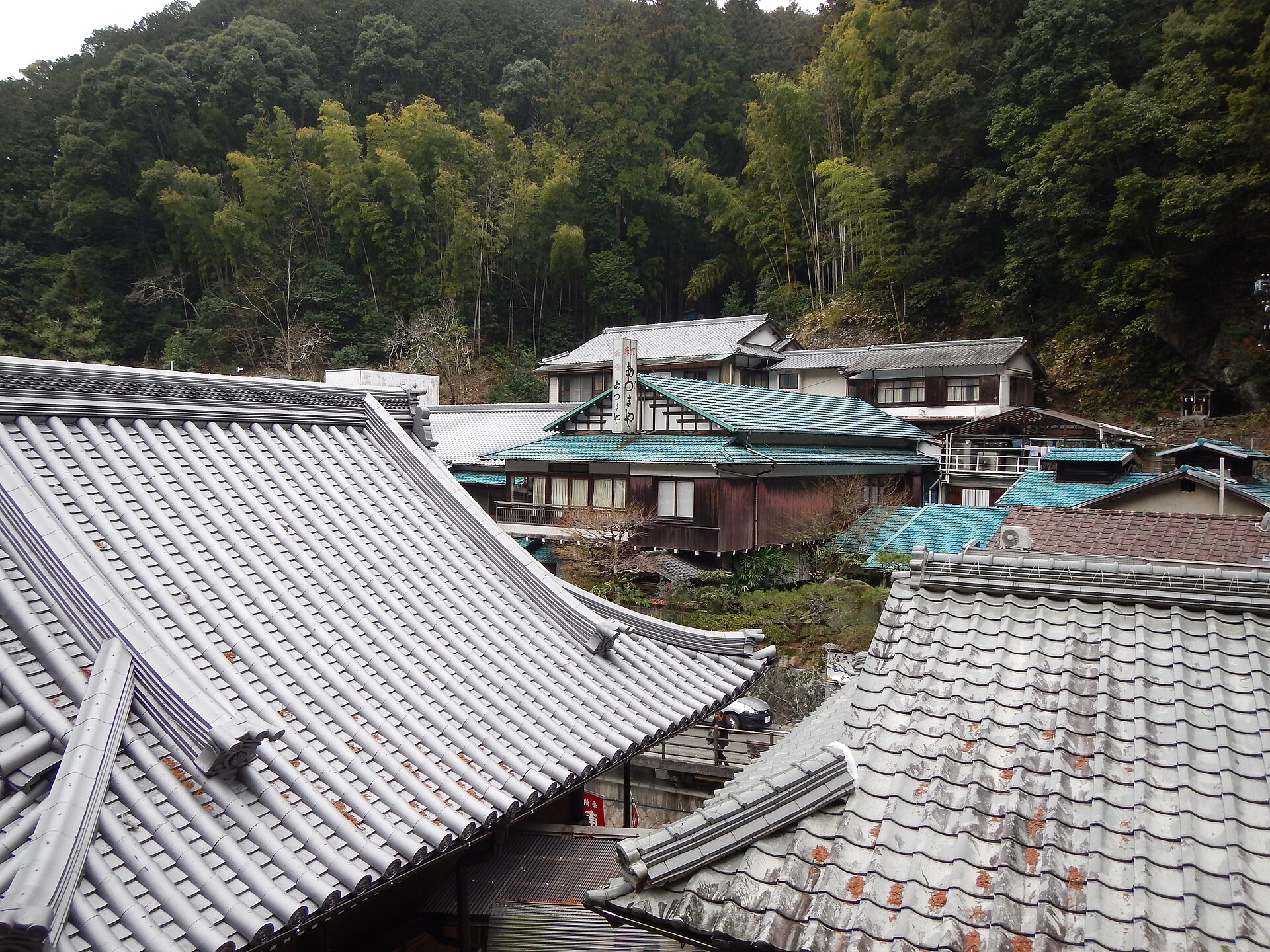
Photo: Nekosuki · CC BY-SA 4.0
Scenes
Meaning
Reach the hot-spring village folded into a cedar valley, and from a cleft in the rock water rises steaming at ninety degrees. Inside Tsuboyu, a small wooden hut by the river, mineral-stained rock cups a milky spring — here, from of old, pilgrims soaked away the dust of the long road and cleared their hearts before turning toward Hongū.
A hot spring where pilgrims on the Kumano route bathed to purify themselves — said to have been discovered 1,800 years ago, one of the oldest hot springs in Japan. Its source rises from the rock at ninety degrees, and from of old pilgrims performed yugori, soaking in this hot water to wash away the impurity of the road before worshipping at Hongū. Tsuboyu, a small wooden hut by the river, is the only bathing place inscribed as a World Heritage Site, and its water is said to change color several times a day. Legend holds that the water once flowed from a statue of Yakushi Nyorai, now enshrined at the nearby temple of Toko-ji. With the Kumano pilgrimage routes, it is a UNESCO World Heritage Site.
Roads through this light
Field notes
- Location
- Kii Peninsula · Japan · N33.8° · E135.7°
- Best time
- Cool mornings and winter, when steam hangs in the valley
- Getting there
- By bus west from Hongū; pilgrims on the Nakahechi crossed the mountains to bathe here before going on to Hongū.
- Etiquette
- A hot spring still in use; keep bathing etiquette and quiet, and do not disturb the source where food is cooked.
Sources
- · UNESCO World Heritage
- · Tanabe City Kumano Tourism Bureau
Photographs are freely licensed works from Wikimedia Commons and similar sources; the author and license appear beneath each image.