Judaism
הַכֹּתֶל הַמַּעֲרָבִי
Western Wall
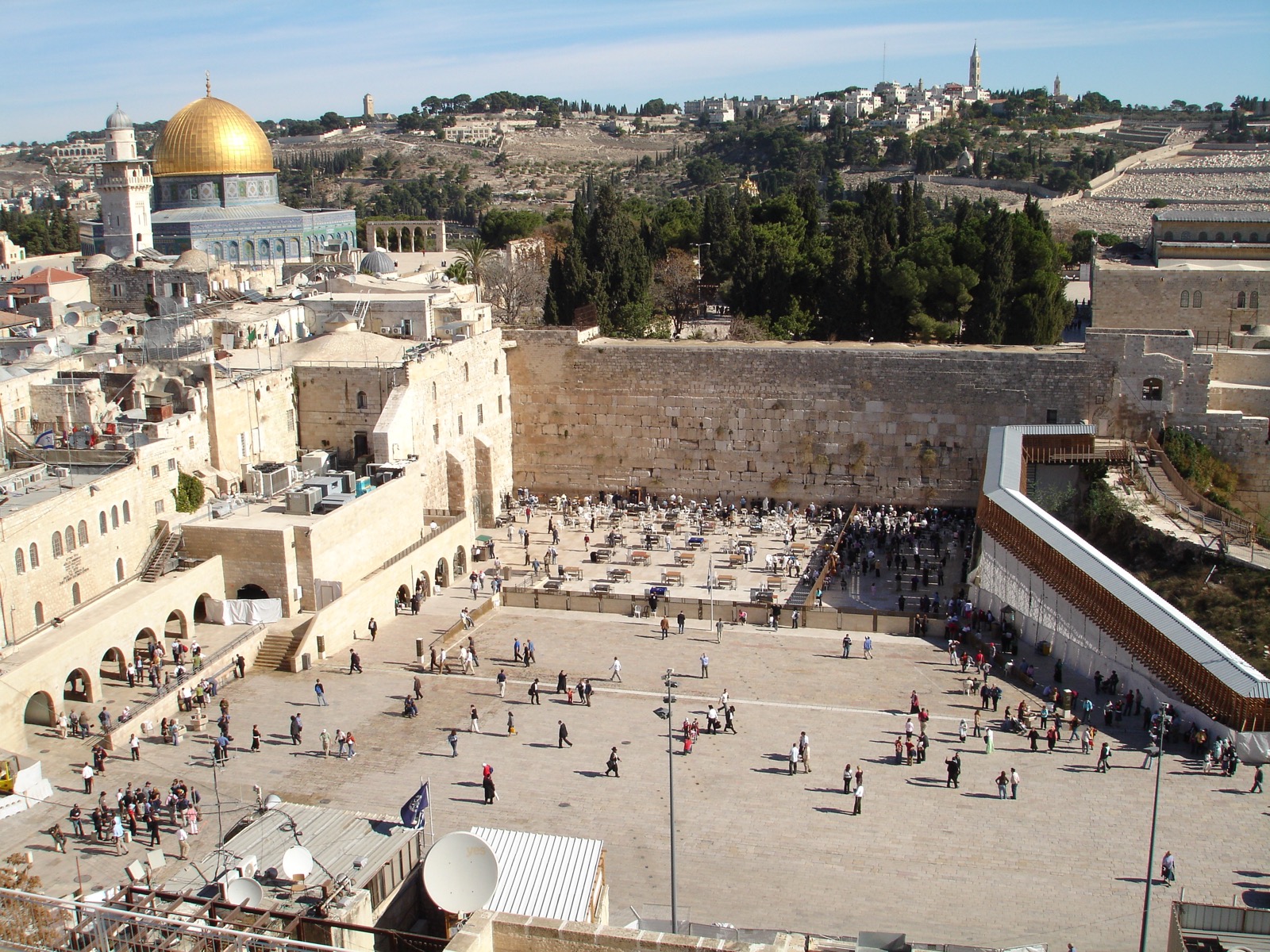
“A thousand prayers folded into the seams of stone”
Photo: Golasso · CC BY-SA 4.0
Scenes
Meaning
A vast wall of stone rises before you, and people quietly slip folded notes into its cracks.
In Jewish tradition it is held to be the surviving section of the western retaining wall of the Second Temple, destroyed by Rome in 70 CE, and for nearly two thousand years it has been the closest place of prayer to where the Temple stood. Herodian-era stones bear later courses upon them, so that the wall itself is a stratigraphy of time. People press written prayers into its seams; the notes are gathered from time to time and, as sacred writing, buried on the Mount of Olives. At dusk on Fridays, as Shabbat begins, the plaza before the wall fills with prayer and song.
Voices across time
“My heart is in the East, and I am at the edge of the West.”
Roads through this light
Field notes
- Location
- Jerusalem · Old City · N31.8° · E35.2°
- Best time
- At the coming of Shabbat, Friday at dusk, when prayer deepens most
- Getting there
- Inside Jerusalem's Old City; enter the plaza on foot after a security check.
- Etiquette
- Prayer areas are separate for men and women, and modest dress is encouraged.
Sources
- · Encyclopaedia Britannica
- · UNESCO World Heritage
Photographs are freely licensed works from Wikimedia Commons and similar sources; the author and license appear beneath each image.