Buddhism
ວັດສີສະເກດ
Wat Si Saket
“Where a small Buddha sits in every niche, and the cloister itself becomes a prayer”
Photo: Basile Morin · CC BY-SA 4.0
Scenes
Meaning
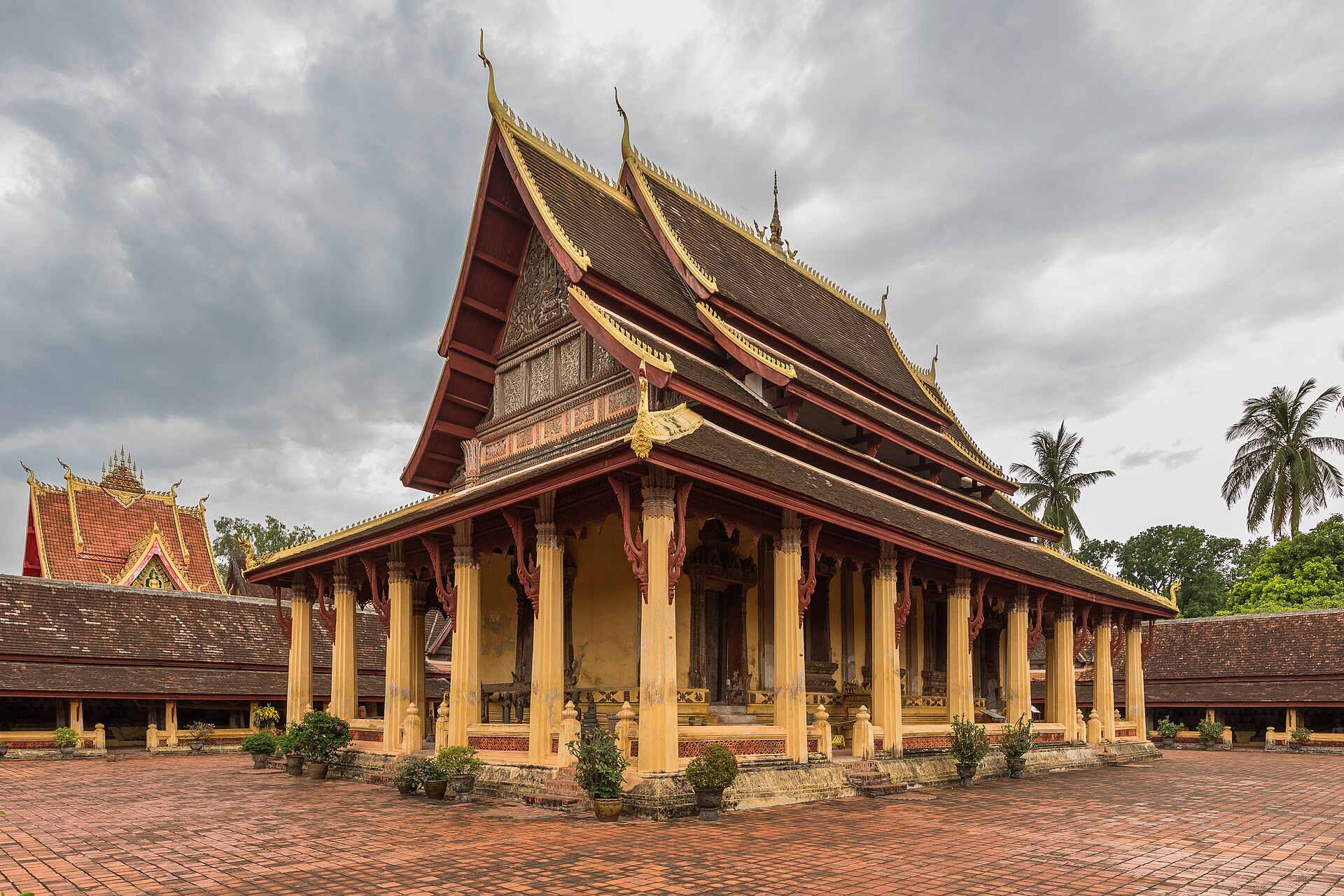
Beyond the rain-darkened brick courtyard the layered roofs sweep low, and as you walk the cloister, small Buddha images sit shoulder to shoulder in every niche.
Held to have been built in 1818 by King Anouvong, it survived the Siamese destruction of Vientiane in 1828 and is regarded as the oldest temple still standing in the city. Thousands of Buddha images, large and small, fill the niches and shelves of the cloister that rings the ordination hall, many of them gathered, it is said, from other temples of the ruined city. Some accounts hold that its Siamese-style architecture spared it — and today it is understood as the place where a lost city's Buddhas are gathered under one colonnade.
Field notes
- Location
- Vientiane · Laos · N18.0° · E102.6°
- Best time
- Early morning, when slanting light finds the Buddhas niche by niche
- Getting there
- Opposite the Presidential Palace in central Vientiane, reached on foot.
- Etiquette
- Shoulders and knees are covered in the hall, and the images are not touched.
Sources
- · Encyclopaedia Britannica
- · Tourism Laos (official)
Photographs are freely licensed works from Wikimedia Commons and similar sources; the author and license appear beneath each image.