Tiwanaku (Indigenous)
Tiwanaku
“A city of stone on the altiplano, where the Gate of the Sun opens toward the sky”
Photo: Fabricio Nina · CC BY 4.0
Scenes
Meaning
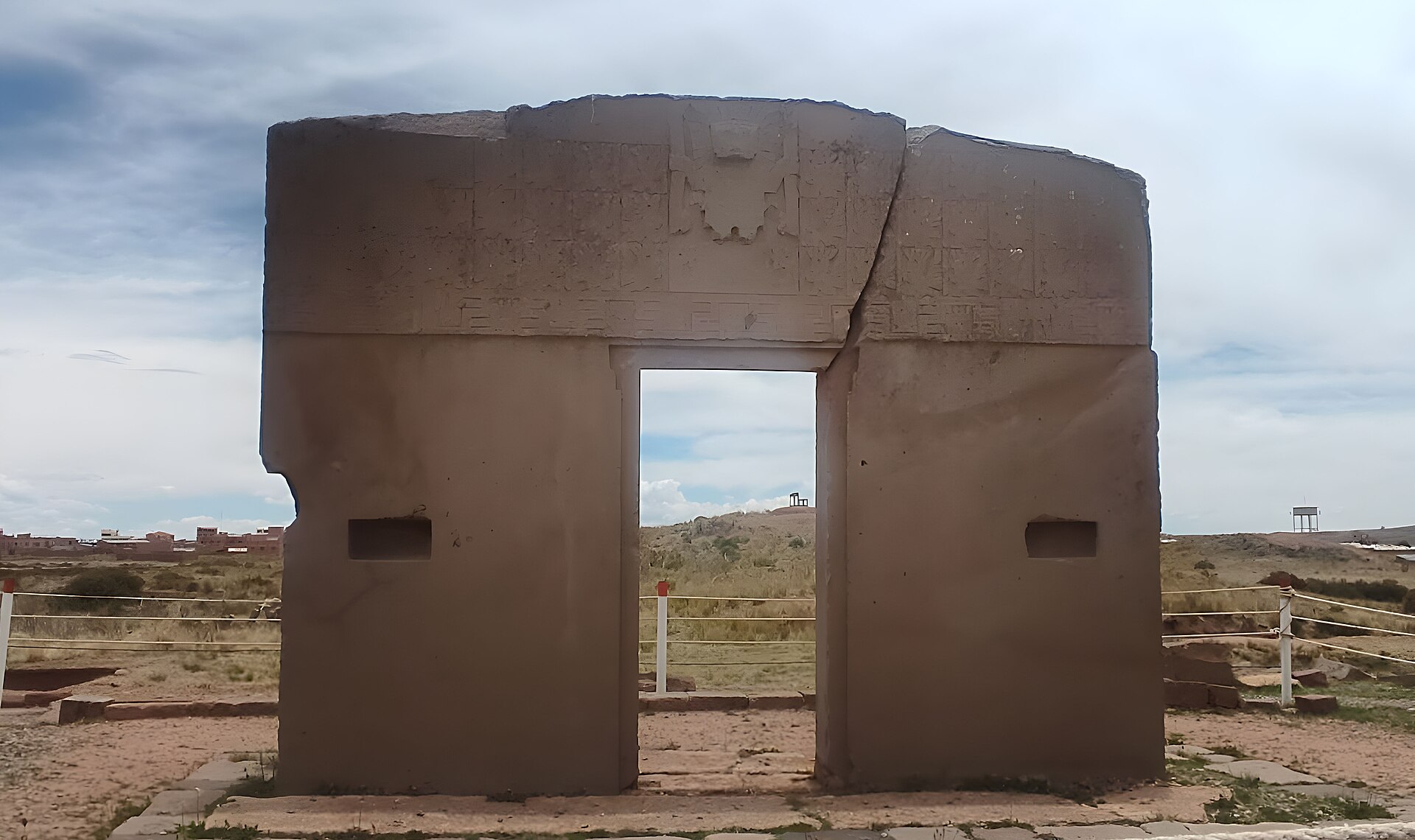
Great sandstone blocks stand locked in courses over the dry high plain. Above the Gate of the Sun, cut whole from a single stone, a staff-bearing god is carved; and from the wall of the sunken temple, faces set into the stone watch you from every side.
Scholarship regards it as the central city of the Tiwanaku civilization, which flourished south of Lake Titicaca around 500–1000 CE. The staff-bearing god on the Gate of the Sun is understood as a creator deity linked to the sun, and the Inca later told of this place as where the world and the sun were born. It is a UNESCO World Heritage Site.
Roads through this light
Field notes
- Location
- 알티플라노 · Bolivia · S16.6° · W68.7°
- Best time
- The dry season, May to September, when morning sun falls on the Gate of the Sun
- Getting there
- About 70 km west of La Paz, Bolivia; by car, then on foot through Kalasasaya, the Gate of the Sun, and the sunken temple.
- Etiquette
- Visitors keep to the marked paths and rope guides and do not touch or climb the monoliths and gateways.
Sources
- · UNESCO World Heritage
- · Encyclopaedia Britannica
Photographs are freely licensed works from Wikimedia Commons and similar sources; the author and license appear beneath each image.