Shinto · Buddhism
滝尻王子
Takijiri-oji
“The gate of Kumano, crossing from the world into the mountains of the gods”
Photo: KMR · CC BY-SA 3.0
Scenes
Meaning
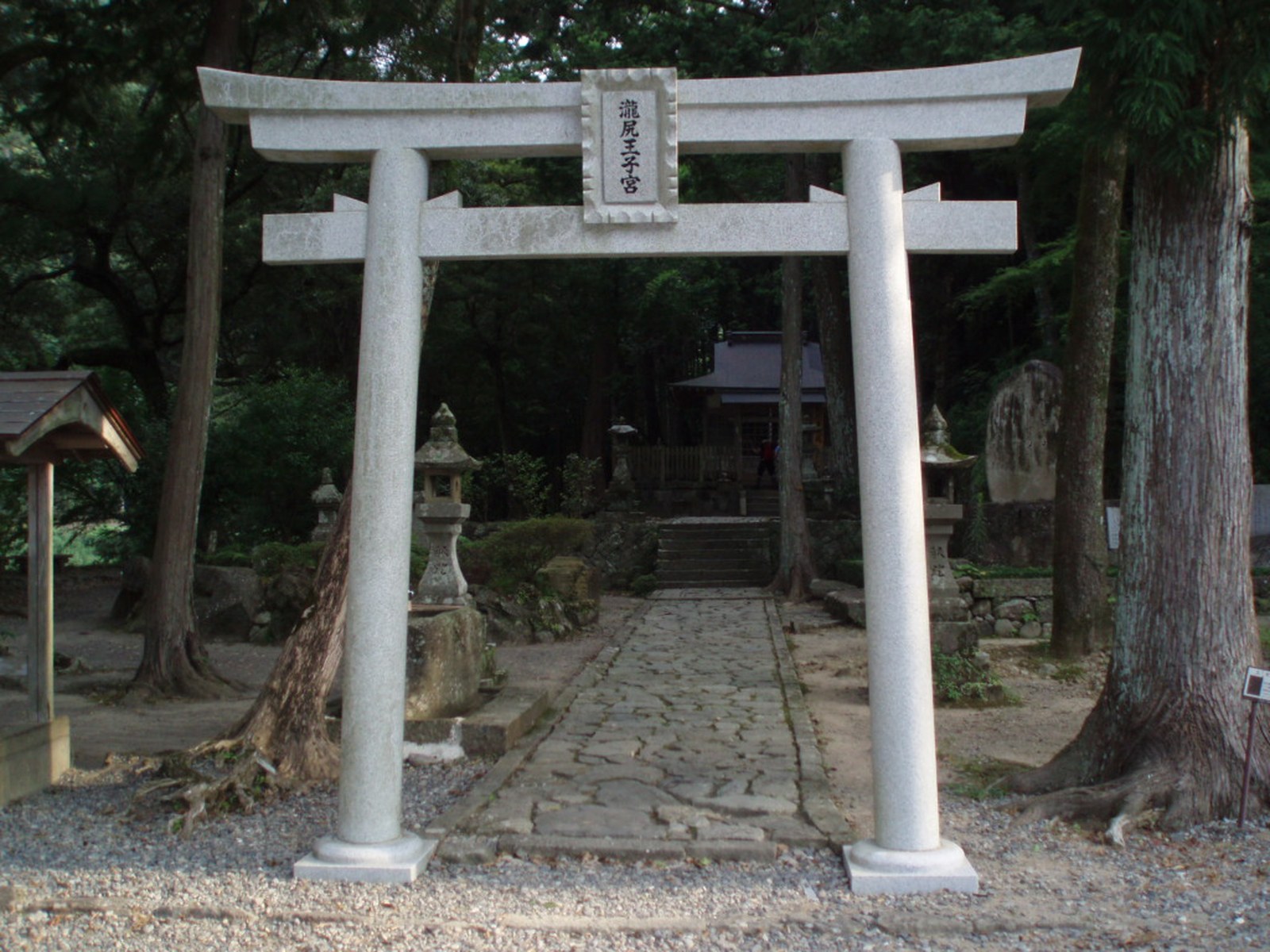
A stone torii holds up a plaque reading 'Takijiri-ōji,' and beyond it, among the cedars, a small hall roofed in cypress bark rests quietly. From here the mountain trail steepens, and in a great rock beside the shrine there is a cleft barely wide enough for one — to squeeze through it, they say, is to be born again. It is the gate where the pilgrimage first enters the mountains of the gods.
An ōji shrine regarded as the gate where pilgrims on the Kumano mountain route (the Nakahechi) entered the sacred precinct. From of old, to pass here was to leave the everyday world and enter the realm of the gods, and it is counted among the principal ōji of the Kumano pilgrimage. In a rock behind the shrine is a narrow cleft called the tainai-kuguri ('womb passage'); to crawl through it was taken as a rite of rebirth and purification. Set at the mouth of a valley where two rivers meet, it is where the cedar mountain path begins to climb. With the Kumano pilgrimage routes, it is a UNESCO World Heritage Site.
Field notes
- Location
- Kii Peninsula · Japan · N33.8° · E135.5°
- Best time
- Late spring and early summer amid deep green cedars, or autumn foliage
- Getting there
- By bus from Tanabe in Wakayama; the mountain route (Nakahechi) begins here and leads on through Takahara and Chikatsuyu to Hongū.
- Etiquette
- An ōji shrine at the start of the mountain route; visitors follow the rules of worship and keep quiet.
Sources
- · UNESCO World Heritage
- · Tanabe City Kumano Tourism Bureau
Photographs are freely licensed works from Wikimedia Commons and similar sources; the author and license appear beneath each image.