Rapa Nui
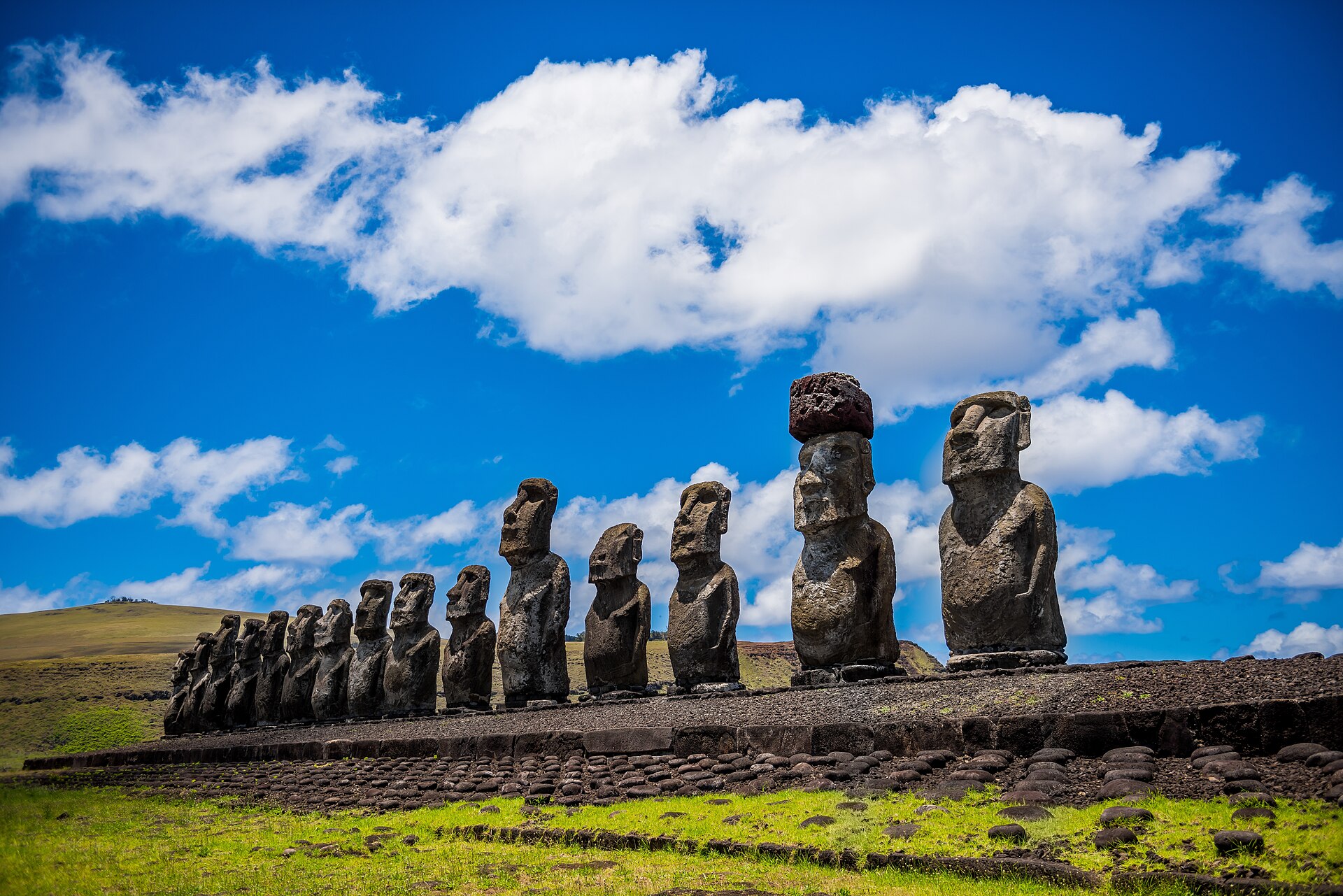
Ahu Tongariki
“Fifteen ancestors keeping watch over the island, their backs to the sea”
Photo: Voltamix · CC BY-SA 4.0
Scenes
Meaning
As dawn rises from the sea behind them, fifteen figures carved from volcanic stone cast long shadows forward. Standing beneath the great one crowned with red stone, you see that the ancestors' eyes face not the sea but the inland where the people lived.
On Rapa Nui, the easternmost island the Polynesian voyagers reached, old clans are held to have carved 'moai' whole from volcanic tuff to honor their ancestors. The fifteen figures of Ahu Tongariki have been re-raised on their platform; the moai mostly stand with their backs to the sea, watching over the settlements so that the ancestors might guard their descendants. A UNESCO World Heritage Site (Rapa Nui National Park).
Roads through this light
Field notes
- Location
- Rapa Nui (Easter Island) · Chile · S27.1° · W109.3°
- Best time
- The early dawn, as the sun rises behind Tongariki
- Getting there
- A flight from Santiago, Chile to Rapa Nui (Hanga Roa), then by road to Tongariki on the island's southeast coast.
- Etiquette
- The platform (ahu) and figures are sacred remains; do not climb or touch them, and keep to the marked paths.
Sources
- · UNESCO World Heritage
- · Encyclopaedia Britannica
Photographs are freely licensed works from Wikimedia Commons and similar sources; the author and license appear beneath each image.