Animism · Folk
ທົ່ງໄຫຫິນ
Plain of Jars
“Vessels of stone left in a field, the hands that set them long forgotten”
Photo: Jakub Hałun · CC BY-SA 4.0
Scenes
Meaning
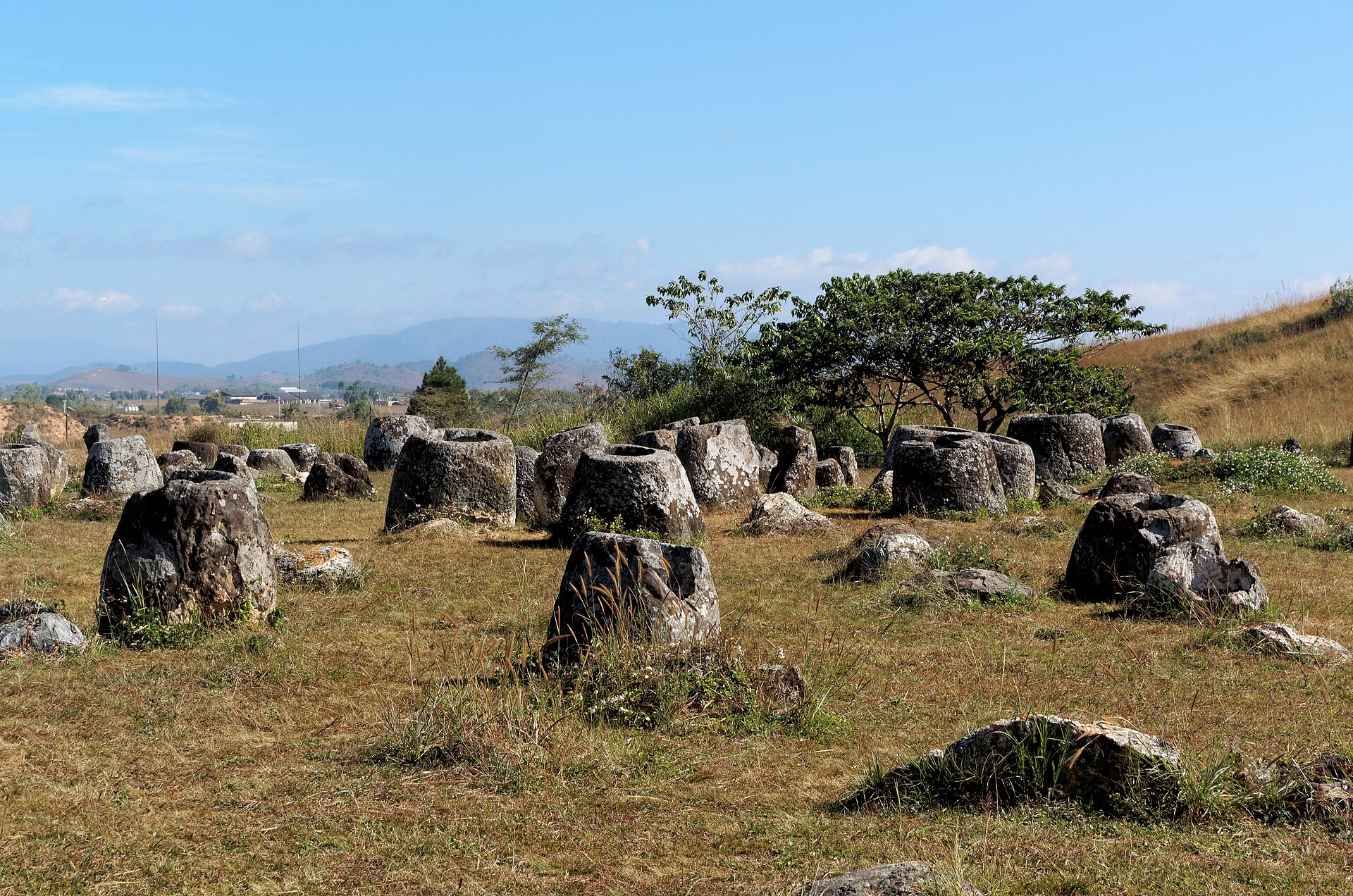
Across a plateau of waving dry grass stand stone jars as tall as a person, and only the wind moves between them as two thousand years of silence settle underfoot.
An Iron Age landscape where thousands of huge limestone and sandstone jars lie scattered across the Xieng Khouang plateau, generally dated between 500 BCE and 500 CE. Research understands them as part of funerary rites — bodies first laid within, the bones later gathered and buried — while Lao tradition tells of giants who brewed and stored their wine in them. Bombing in the late twentieth century kept the site closed for decades, and even now only cleared corridors may be walked. It was inscribed as a UNESCO World Heritage Site in 2019.
Field notes
- Location
- Xieng Khouang · Laos · N19.4° · E103.2°
- Best time
- Early morning in the dry season, as mist lifts off the plateau
- Getting there
- About thirty minutes by road from Phonsavan to Site 1.
- Etiquette
- Stay within the marked cleared paths, and do not climb on the jars.
Sources
- · UNESCO World Heritage
- · Encyclopaedia Britannica
Photographs are freely licensed works from Wikimedia Commons and similar sources; the author and license appear beneath each image.