Shinto
富士山
Mount Fuji
“A snow-capped cone afloat in the sky, the mountain Japan revered”
Scenes
Meaning
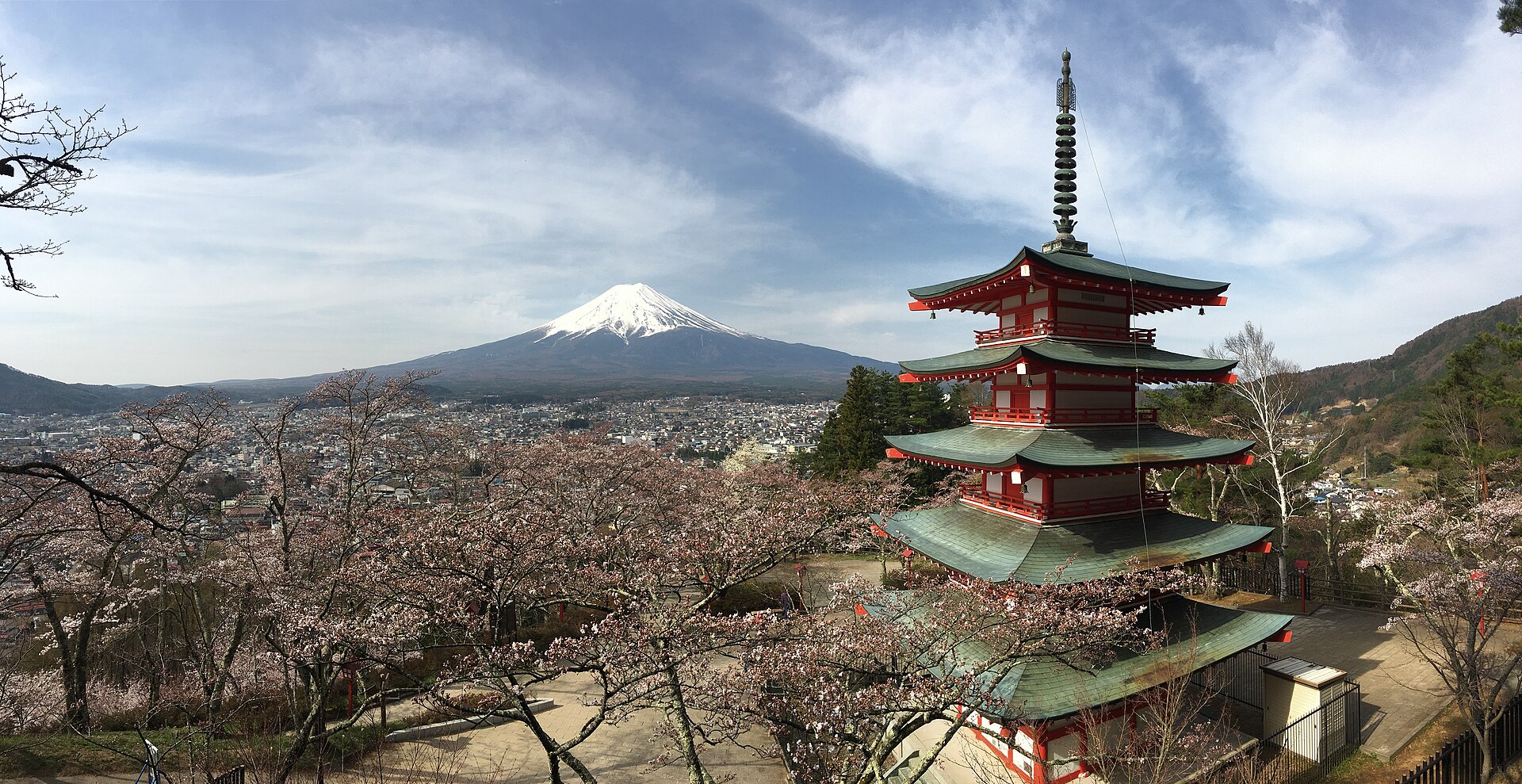
A perfect snow-capped cone floats in the sky beyond cherry blossoms and a vermilion pagoda, its shadow resting still on the lake. From the red shrine at its foot, prayers to the mountain god carry on into the long pilgrimage toward the summit.
It is Japan's highest mountain and has long been revered as a sacred peak where a god dwells. In Shinto tradition the mountain itself is honored as a deity, and this faith has been carried on through the Sengen shrines at its foot — chief among them Fujisan Hongū Sengen Taisha — and the pilgrimage that climbs to the summit. It is a UNESCO World Heritage Site.
Field notes
- Location
- Honshu · Japan · N35.4° · E138.7°
- Best time
- Spring, when cherry blossoms bloom, or early morning in the climbing season, July to September
- Getting there
- From Tokyo to the foot of Fuji (Kawaguchiko or Fujinomiya), then, in the climbing season, on the summit pilgrimage.
- Etiquette
- Visitors observe courtesy at the shrines and summit places of worship and follow the trail rules.
Sources
- · UNESCO World Heritage
- · Encyclopaedia Britannica
Photographs are freely licensed works from Wikimedia Commons and similar sources; the author and license appear beneath each image.