Buddhism
लुम्बिनी
Lumbini
“Beneath the shade of the ashoka tree, the first place a life came into the world”
Photo: Ricky Partel · CC BY-SA 4.0
Scenes
Meaning
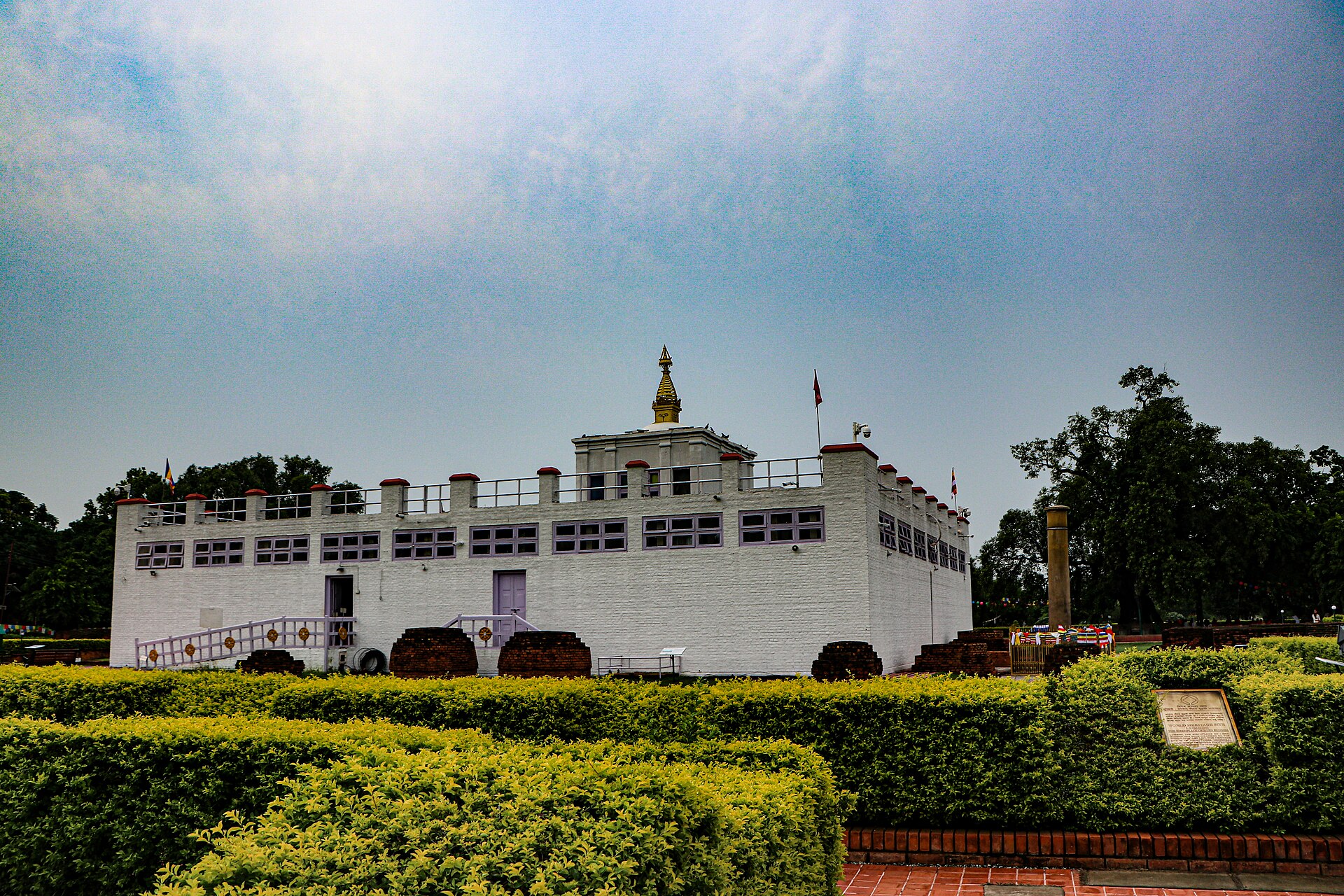
Between the pond and the shade of the bodhi tree the white temple sits low, and pilgrims' prayer flags ripple in the wind.
Buddhist tradition holds that Queen Maya gave birth to the Buddha in this grove while traveling to her family home; with Bodh Gaya of the awakening, Sarnath of the first teaching, and Kushinagar of the final nirvana, it is counted among the four great places of pilgrimage. The pillar Emperor Ashoka raised on his own pilgrimage, around 249 BCE, still stands with its inscription — 'here the Buddha was born' — and is held to be among the oldest markers of any sacred site. Within the Maya Devi temple a marker stone preserves what tradition holds as the very spot, and temples raised by nations across the world gather in the surrounding garden. It is a UNESCO World Heritage site.
Voices across time
“Here the Buddha was born, sage of the Śākyas.”
Roads through this light
Field notes
- Location
- Lumbini · Nepal · N27.5° · E83.3°
- Best time
- The cool months of autumn and winter; early morning at the Maya Devi Temple
- Getting there
- About thirty minutes by car from Bhairahawa and its airport.
- Etiquette
- Within the sacred garden, quiet, bare feet, and the marked pilgrim paths are honored.
Sources
- · UNESCO World Heritage
- · Encyclopaedia Britannica
Photographs are freely licensed works from Wikimedia Commons and similar sources; the author and license appear beneath each image.