Shinto · Buddhism
熊野本宮大社
Kumano Hongu Taisha
“The heart of Kumano, where the pilgrimage first arrives”
Photo: Yanajin33 · CC BY-SA 3.0
Scenes
Meaning
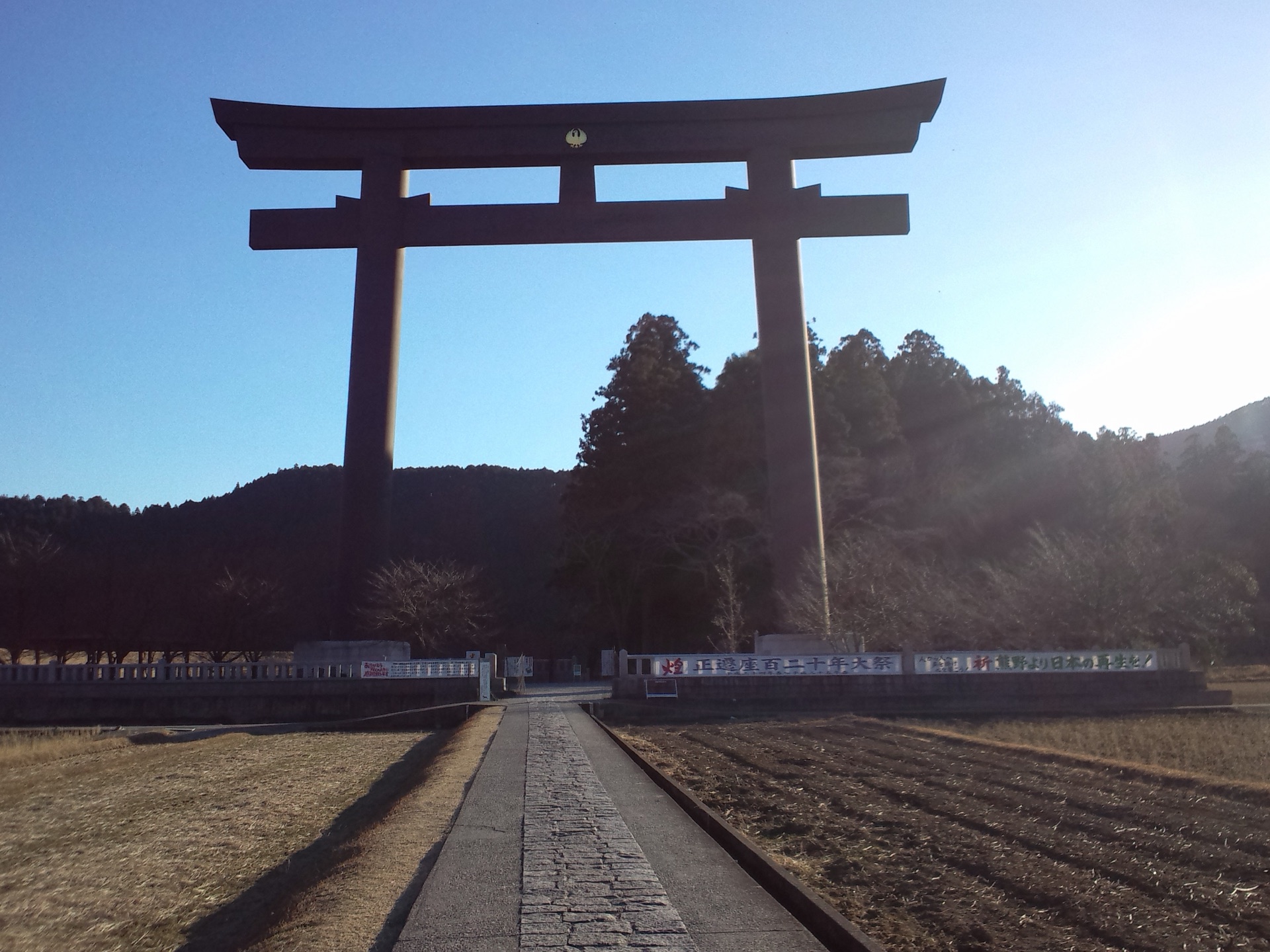
Climb the approach lined with pilgrim banners through the cedars, and at the top of the stone stairway a hall roofed in cypress bark sits with its golden finials raised to the sky. At Ōyunohara, the old site where two rivers once met, the largest torii gate in the world stands alone, catching the morning sun through the river mist. It is the heart the Kumano pilgrimage reaches first.
Regarded as the head shrine of more than three thousand Kumano shrines across Japan. It originally stood on Ōyunohara, a sandbar where the Kumano and Otonashi rivers meet; after a great flood in 1889, the surviving halls were moved to the present higher ground. On the old site now stands a great torii gate of about 34 meters, the largest in the world, raised in 2000. Long the center of a Kumano faith where Shinto and Buddhism were joined, it was the first shrine pilgrims worshipped at after walking the mountain route (the Nakahechi). With the Kumano pilgrimage routes, it is a UNESCO World Heritage Site.
Voices across time
“Like trails of ants, the people streamed toward Kumano.”
Field notes
- Location
- Kii Peninsula · Japan · N33.8° · E135.8°
- Best time
- Early morning when mist covers the river, or autumn amid deep foliage
- Getting there
- From Tanabe in Wakayama, on foot along the mountain route (Nakahechi) or by bus to Hongū; the great Ōyunohara torii is a short walk from the shrine.
- Etiquette
- The head shrine of the Kumano faith; visitors follow the rules of worship and keep quiet.
Sources
- · UNESCO World Heritage
- · Encyclopaedia Britannica
Photographs are freely licensed works from Wikimedia Commons and similar sources; the author and license appear beneath each image.