West African Islam (Sudano-Sahelian)
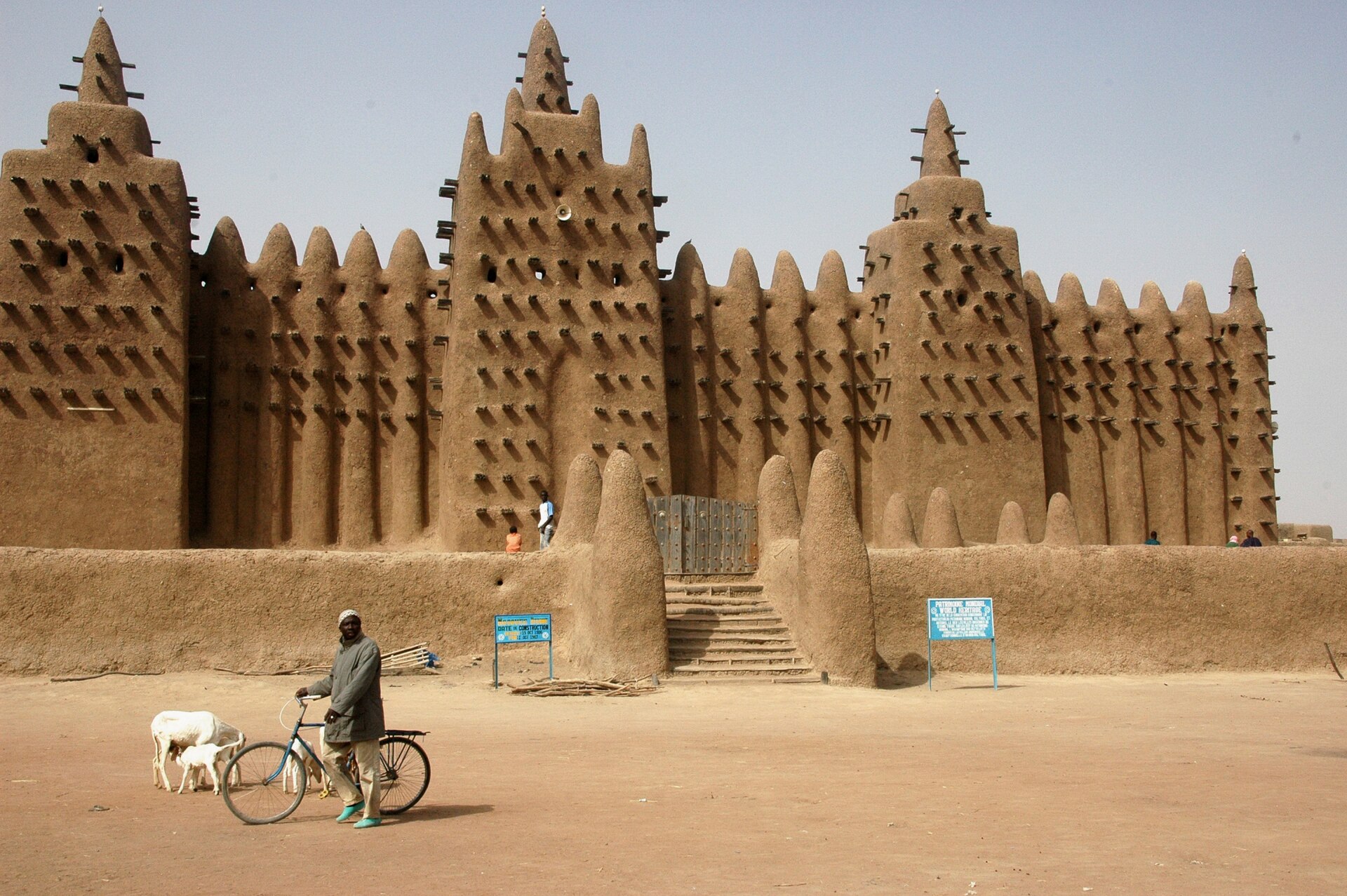
Grande Mosquée de Djenné
Great Mosque of Djenné
“A cathedral of earth the whole town remakes by hand each year”
Photo: Ruud Zwart · CC BY-SA 3.0
Scenes
Meaning
At dusk the mud walls glow red, and the palm-wood beams jutting from every surface cast long shadows. Three towers rise into the dry sky, and the earth underfoot and the earth of the walls run together in one light.
Standing in the old trading city of Djenné on Mali's Niger floodplain, the present mosque is held to have been rebuilt in the traditional style around 1907. Each year before the rains the whole community gathers to re-plaster its walls in a festival called the crépissage, keeping it standing together; it is regarded as the largest mud-brick structure in the world and an emblem of Sudano-Sahelian architecture. A UNESCO World Heritage Site.
Field notes
- Location
- Djenné · Mali · N13.9° · W4.6°
- Best time
- Around the crépissage (re-plastering) before the rains; the light of early morning or dusk
- Getting there
- Reached overland from Bamako or Mopti in Mali; a great market fills the square before the mosque on Mondays.
- Etiquette
- A place of ongoing worship; non-Muslims may not enter the interior, and dress and photography rules are observed.
Sources
- · UNESCO World Heritage
- · Encyclopaedia Britannica
Photographs are freely licensed works from Wikimedia Commons and similar sources; the author and license appear beneath each image.