Buddhism
གཙུག་ལག་ཁང་།
Tsuglagkhang (Dharamshala)
“In a town whose name means the house of dharma, a lamp lit once more”
Scenes
Meaning
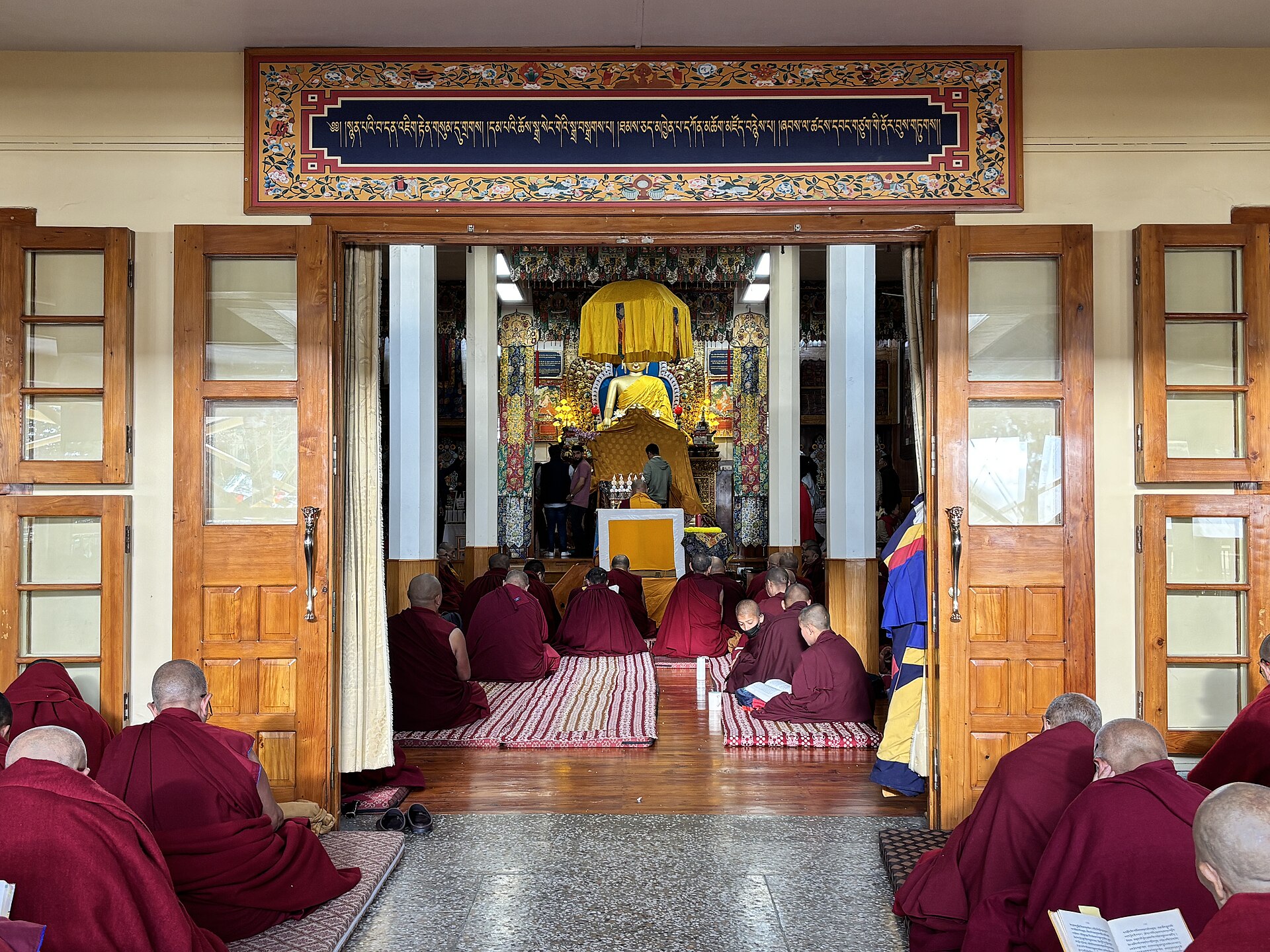
From the temple above the cedar forest the monks' chanting rolls low, and along the corridor the prayer wheels turn one after another at pilgrims' fingertips.
Since the Fourteenth Dalai Lama settled here in 1960 after leaving Lhasa in 1959, this has been the heart of the Tibetan community in exile. The Tsuglagkhang temple and Namgyal monastery — the Dalai Lama's personal monastery — surround his residence, and the kora path around them is lined with prayer wheels, mani stones, and five-colored flags. The name Dharamshala itself means a 'house of dharma,' a pilgrims' rest house — so that a faith carried over the mountains came to dwell in a town of that very name, called 'Little Lhasa.'
Voices across time
“My religion is very simple. My religion is kindness.”
Roads through this light
Field notes
- Location
- McLeod Ganj · Dharamshala · N32.2° · E76.3°
- Best time
- Early morning on the kora, or the hours of chanting on teaching days
- Getting there
- Reached on foot from McLeod Ganj, the upper town of Dharamshala.
- Etiquette
- The kora is walked clockwise, and silence is kept in the temple.
Sources
- · Encyclopaedia Britannica
- · Central Tibetan Administration
Photographs are freely licensed works from Wikimedia Commons and similar sources; the author and license appear beneath each image.