Christianity
დავითგარეჯა
Davit Gareja
“Cut into the rock of the half-desert, a place that lived out silence”
Scenes
Meaning
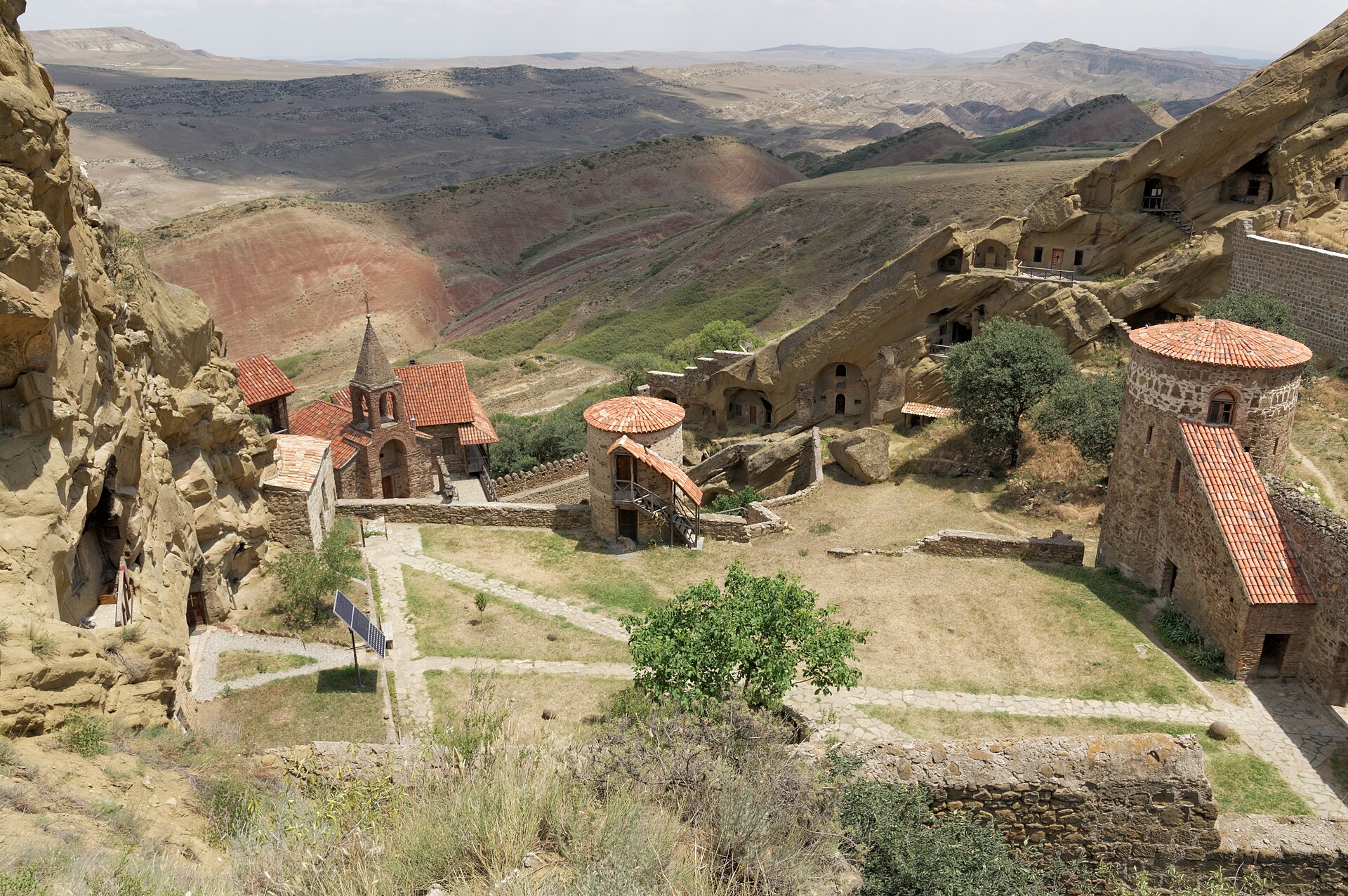
In the middle of a half-desert where striped hills roll to the horizon, caves hollowed from the sandstone sit beside a red-tiled bell tower, and only the sound of wind passes.
A complex of cave monasteries founded in the sixth century by David Garejeli, held to be one of the Thirteen Assyrian Fathers who came from Syria. Hundreds of cells and chapels cut into the sandstone are scattered across several valleys, and the caves of the Udabno monastery keep frescoes from the ninth to thirteenth centuries. Regarded as the cradle of Georgian monasticism and mural painting, it has been destroyed and abandoned more than once, yet monks have returned and prayer continues here.
Voices across time
“David from Georgia has carried away the grace of the holy city in three stones.”
Roads through this light
Field notes
- Location
- Gareja · Georgia · N41.4° · E45.4°
- Best time
- Spring, in the short season when green touches the half-desert
- Getting there
- About two hours by road from Tbilisi, then on foot up the hill path.
- Etiquette
- This is a living monastic community — quiet is kept, and the frescoes are never touched.
Sources
- · Encyclopaedia Britannica
- · Georgian National Tourism Administration
Photographs are freely licensed works from Wikimedia Commons and similar sources; the author and license appear beneath each image.