Ancestral Puebloan (Indigenous)
Chaco Canyon
“A city whose stones were laid to the paths of the sun and the moon”
Photo: Gerd Eichmann · CC BY-SA 4.0
Scenes
Meaning
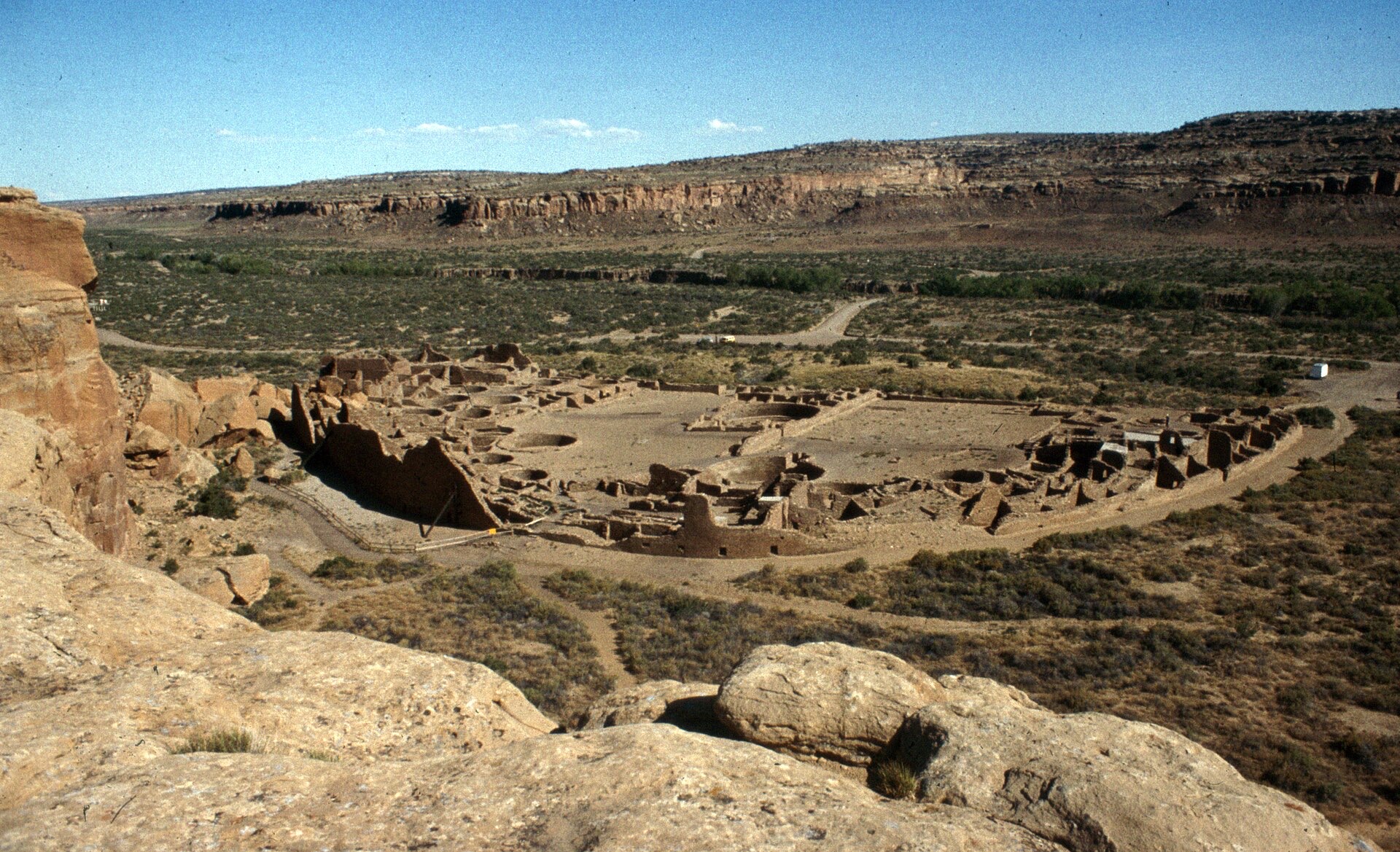
On the floor of a desert canyon, hundreds of rooms rise in tiers in a half-moon. Pass through one low doorway and another opens in a straight line beyond it, and the light falling between them quietly retraces the reckonings of people who once read the sky here.
The Ancestral Puebloan people built this center of their civilization over three centuries from around 850 CE. Great houses such as Pueblo Bonito set their walls and openings to the extremes of the sun and moon at the solstices, and roads running straight from the canyon in every direction joined distant communities. Today the Pueblo peoples such as the Hopi and Zuni, and the Navajo, hold it as ancestral ground. It is a UNESCO World Heritage Site.
Roads through this light
Field notes
- Location
- San Juan Basin · New Mexico · N36.1° · W108.0°
- Best time
- Around the solstices, when the light falls into the reckonings of the walls and doorways
- Getting there
- In a remote canyon of northwestern New Mexico; reach the visitor center over unpaved roads, then walk among the great houses.
- Etiquette
- One does not climb or lean on the walls, and leaves each potsherd where it lies — a way of keeping the ancestors' houses as they are.
Sources
- · National Park Service — Chaco Culture
- · UNESCO World Heritage
Photographs are freely licensed works from Wikimedia Commons and similar sources; the author and license appear beneath each image.