Hindu
बद्रीनाथ
Badrinath
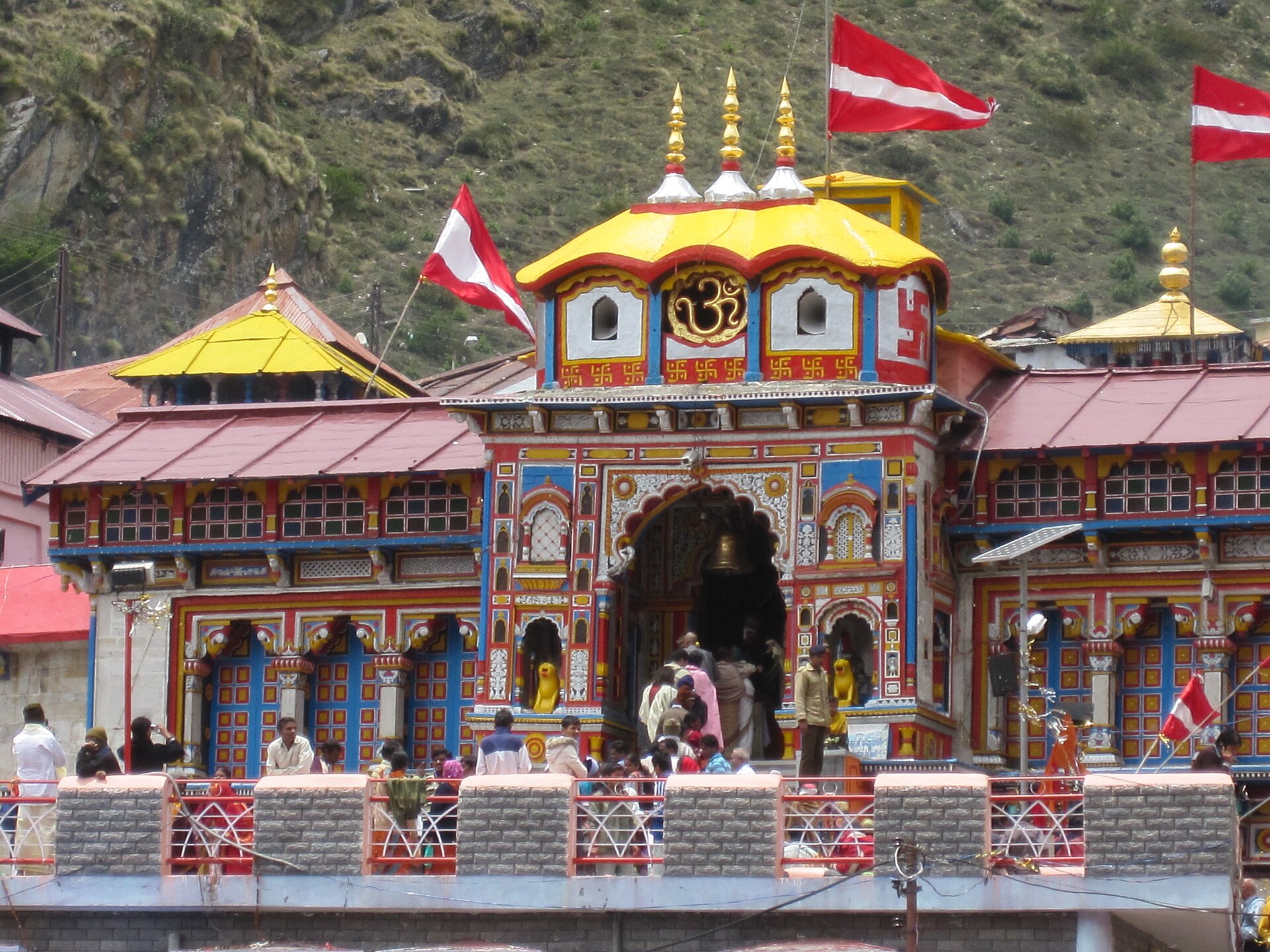
“Below Neelkanth peak, Vishnu in meditation — the last shrine of the Char Dham”
Photo: Anubha khare · CC BY-SA 4.0
Scenes
Meaning
Below Neelkanth, whose snow summit burns gold, a temple painted in bright colors stands by the Alaknanda river. Within its yellow, red, and blue façade, Vishnu carved in black stone sits with eyes closed in meditation — and pilgrims first bathe in the hot spring Tapt Kund below the temple before coming before the god. It is the last place of the Char Dham, reached over pass after pass.
The easternmost and last of Uttarakhand's four Char Dham, and counted among the four Char Dham of all India — a shrine of Vishnu. It stands on the bank of the Alaknanda, between the Nara and Narayana ranges, below Neelkanth peak (6,597 m). Tradition holds that while Vishnu meditated here in penance, the goddess Lakshmi became a badri (jujube) tree to shelter him from the snow — hence the name Badrinath. The shrine is said to have been re-established by Adi Shankara in the 8th century, and it enshrines an image of Vishnu in meditation carved in black stone. By long custom pilgrims bathe in the sulfur hot spring Tapt Kund below the temple before worship. Its brightly painted façade stands vivid against the snow peaks.
Roads through this light
Field notes
- Location
- Garhwal Himalaya · Chamoli, Uttarakhand · N30.7° · E79.5°
- Best time
- From late spring, when the temple opens, until early winter; in winter, closed by snow, the deity is moved to Joshimath.
- Getting there
- By mountain road in Uttarakhand to the temple; the last shrine of the Char Dham, reached on from Kedarnath.
- Etiquette
- A shrine still in worship; keep the etiquette of bathing at Tapt Kund and of worship, and keep quiet.
Sources
- · Encyclopaedia Britannica: Badrinath
- · Wikipedia: Badrinath Temple
Photographs are freely licensed works from Wikimedia Commons and similar sources; the author and license appear beneath each image.