Buddhism
अजिंठा लेणी
Ajanta Caves
“Cave sanctuaries cut into the rock, the Buddha painted on every wall”
Scenes
Meaning
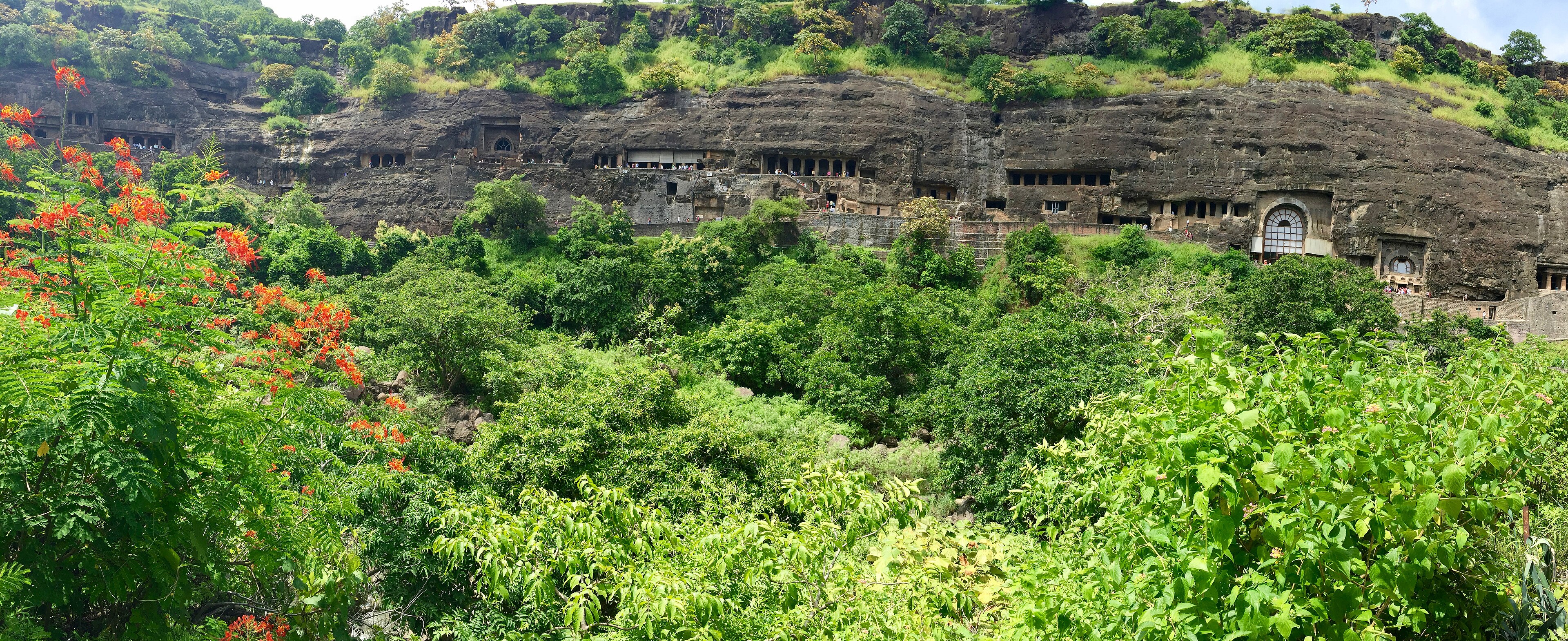
Along the cliff of a horseshoe gorge, dark cave mouths open in tier upon tier. Step inside, and in the darkness lined with rock-cut pillars, bodhisattvas in murals more than a thousand years old open their eyes in the faint light.
Scholarship regards these as some thirty Buddhist cave monasteries cut into the rock between roughly the 2nd century BCE and the 5th century CE. The murals and carvings filling their walls and ceilings are understood as a summit of Indian Buddhist art, and this painting tradition is said to have traveled the trade routes eastward into Central Asia and the caves of Dunhuang. It is a UNESCO World Heritage Site.
Roads through this light
Field notes
- Location
- Maharashtra · India · N20.6° · E75.7°
- Best time
- After the monsoon, July to October, when the gorge is green and the light is clear, or early morning
- Getting there
- About 100 km northeast of Aurangabad in Maharashtra, India; by car, then on foot along the cliff among the caves.
- Etiquette
- To protect the murals, visitors avoid flash and touch inside the caves and keep to the marked route.
Sources
- · UNESCO World Heritage
- · Archaeological Survey of India
Photographs are freely licensed works from Wikimedia Commons and similar sources; the author and license appear beneath each image.